
In view of the disruptive situations, the Central government has also announced a financial relief package of Rs 497 crores aimed at helping exporters affected by disruptions in West Asia.

Beijing has been wary of Sanae Takaichi's efforts to boost Japan's military profile since taking office six months ago, points out Dr Rajaram Panda.
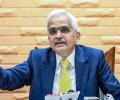
'Policy consistency combined with timely and calibrated reforms are expected to ensure that India not only maintains macroeconomic stability, but also emerges as a globally competitive and inclusive economy.'
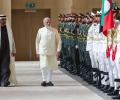
Prime Minister Narendra Modi has offered India's support to bring peace to West Asia during talks with UAE President Sheikh Mohamed bin Zayed Al Nahyan. Both countries signed agreements to strengthen strategic collaborations in energy and defence.

India should not stay on the margins of this initiative. There should be a serious debate about what would be in India's best interests asserts former foreign secretary Shyam Saran.

Haryana Chief Minister Nayab Singh Saini criticises the AAP-led Punjab government for political instability and lack of industrial development, while promoting Haryana's investor-friendly policies and industrial growth initiatives.
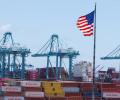
Indian exports to the US will face a 10% tariff, down from 25%, for 150 days following a US Supreme Court ruling. However, uncertainty persists due to potential further tariff hikes and long-term implications.

'In all these years of rupee depreciation, of rising oil prices, of inflation caused by import dependence, not one leader had the courage to look the people in the eye and say: Please do this for your country.'

An Iranian tanker successfully bypassed the US Navy to deliver crude oil to the Asia-Pacific region, despite ongoing tensions and a US blockade.

India has initiated a probe into imports of subsidised paperboard from China and Indonesia following complaints from domestic manufacturers. The investigation will assess the impact of these imports on the Indian paper industry and determine if anti-subsidy duties are warranted.
India has initiated a probe into imports of subsidised paperboard from China and Indonesia following complaints from domestic manufacturers. The investigation will assess the impact of these imports on the Indian paper industry and determine if anti-subsidy duties are warranted.

The proposed trade deal with the 27-nation European Union (EU) is expected to provide zero-duty access to the $95 billion European market for Indian textile and apparel manufacturers. Currently, India's share of the European market is just 6 per cent, or $5.5 billion.
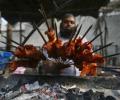
A consignment of meat seized in Jalna, Maharashtra, on suspicion of being beef has been identified as buffalo meat, leading to its release along with the trucks that were transporting it.

US President Donald Trump has announced plans to clear the Strait of Hormuz to secure the vital oil corridor, citing risks to global energy supplies and criticising other nations' inaction.

The European Union (EU) has suspended export benefits to sectors such as textiles and plastics under a preferential scheme for India and two other countries from January 1, a move that will impact the country's shipment to the 27-nation bloc. The development is important as the two sides are likely to announce the closure of negotiations for a free tarde agreement (FTA) on January 27.

India and the European Union (EU) on Tuesday announced the conclusion and finalisation of negotiations for the proposed free trade agreement (FTA).

The 4th India Sporting Goods Fair (ISGF) showcases athletic gear and equipment from 75 exhibitors, highlighting the government's commitment to promoting sports goods manufacturing in India.
The 4th India Sporting Goods Fair (ISGF) is set to take place, showcasing athletic gear and equipment from across the country, as the government pushes to establish India as a global hub for sports goods manufacturing.

Iran has presented a multi-layered proposal to the US in an attempt to break the deadlock in peace talks, focusing on de-escalation and nuclear programme discussions.

As industrial plants boost the village's profile, locals demand priority hiring, alongside better storage facilities and water security.
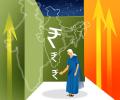
The World Bank has affirmed India's strong position to withstand the current global energy shock, citing high foreign exchange reserves, fiscal space, and low inflation as key buffers supporting continued growth despite international headwinds.

Trinamool Congress leader Abhishek Banerjee accuses the central government of withholding funds from West Bengal to punish voters for supporting the TMC, while highlighting state-led initiatives to support the population.

Is Bhutan merely experimenting with digital finance -- or is the Himalayan kingdom punching far above its weight, quietly playing one of the most sophisticated strategic games in Asia today? asks Varun Arya.

The popularity of US President Donald Trump is waning with approval ratings at its lowest, according to former diplomat Mahesh Sachdev, who notes that with two-thirds of Americans not approving of a continuation of the war on Iran, Trump faces the risk of being impeached.

Union Minister Ashwini Vaishnaw chaired a meeting focusing on Artificial Intelligence, emerging technologies, and electronics hardware manufacturing, highlighting India's progress and future roadmap in these sectors.

Historically, India was a major buyer of Iranian crude, importing significant volumes of Iranian light and heavy grades due to strong refinery compatibility and favourable commercial terms.

'The West Asia or the Gulf crisis has shown that what we develop as national infrastructure when things are not as bad as they could be, we forget to plan for adversities.'

The question is whether the clocks allow enough time for two deeply mistrustful sides to get there, and whether the surface calm holds long enough for the paddling to produce something before the ceasefire ends on April 22, notes Prem Panicker in his must read blog on the Iran War.
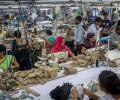
While the move may give a competitive edge over rivals like Bangladesh in the global market, several industry bodies raised concerns that many state governments may not implement it on the ground.

India significantly increased piped natural gas (PNG) connections in March as the government accelerates the expansion of cleaner fuel networks amid global supply disruptions.

The United States Trade Representative (USTR) office on Wednesday launched a sweeping investigation into manufacturing and industrial practices in 16 economies, including India, citing concerns over what it calls 'structural excess capacity' that could distort global trade. Announcing the move on a White House press call, Jamieson Greer said the probe would be conducted under Section 301 of the Trade Act of 1974, one of Washington, DC's most powerful trade enforcement tools.
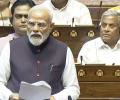
Prime Minister Narendra Modi addresses the Rajya Sabha, detailing India's strategies to navigate the global energy crisis sparked by the West Asia conflict, including securing diverse energy sources and expanding strategic oil reserves.
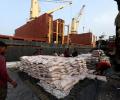
The government on Wednesday approved two schemes worth Rs 45,000 crore to help exporters tide over the impact of high tariffs imposed by the US on Indian shipments.

The deal shifts the US posture towards India from hostile to neutral, and that matters for growth, points out T T Ram Mohan.

Amid escalating tensions with Iran, President Trump is urging nations dependent on Middle Eastern oil to deploy warships to the Strait of Hormuz to safeguard critical global energy supplies.

'Strikes into the Gulf countries are proof that the security guarantees offered by the US are ineffective and that the Gulf countries cannot rely on American security assurances for their safety.'

India and the US have decided to reschedule their meeting to finalize the interim trade pact due to recent developments and implications, including changes in US tariffs.

India has joined the US-led 'Pax Silica' alliance, aimed at building a resilient supply chain for critical minerals and artificial intelligence, marking a significant step in strengthening bilateral ties and fostering economic security.

In a region increasingly shaped by competition and coercion, such collaboration strengthens security without confrontation, builds capacity without dependency and promotes order without domination, points out Dr Kumar.
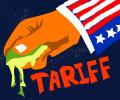
India must focus on building enduring national capabilities and economic sovereignty in the face of shrinking space for rules-based trading, anti-immigrant stance, weaponization of energy sources and growing use of export controls in critical sectors, the Economic Survey said on Thursday.
 © 2026 Rediff.com - Advertise with us - Disclaimer - Privacy Policy - Sitemap - Feedback - About us - Terms of use - Grievances